-
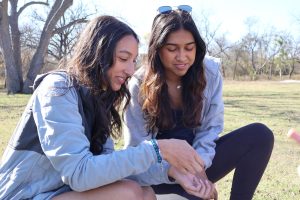
Looking towards their guide, seniors Aanya Ujjval and Satchi Patki learn about the excavation techniques used at the Gault site. The experience was guided by the posters around the site which contained detailed information.

-
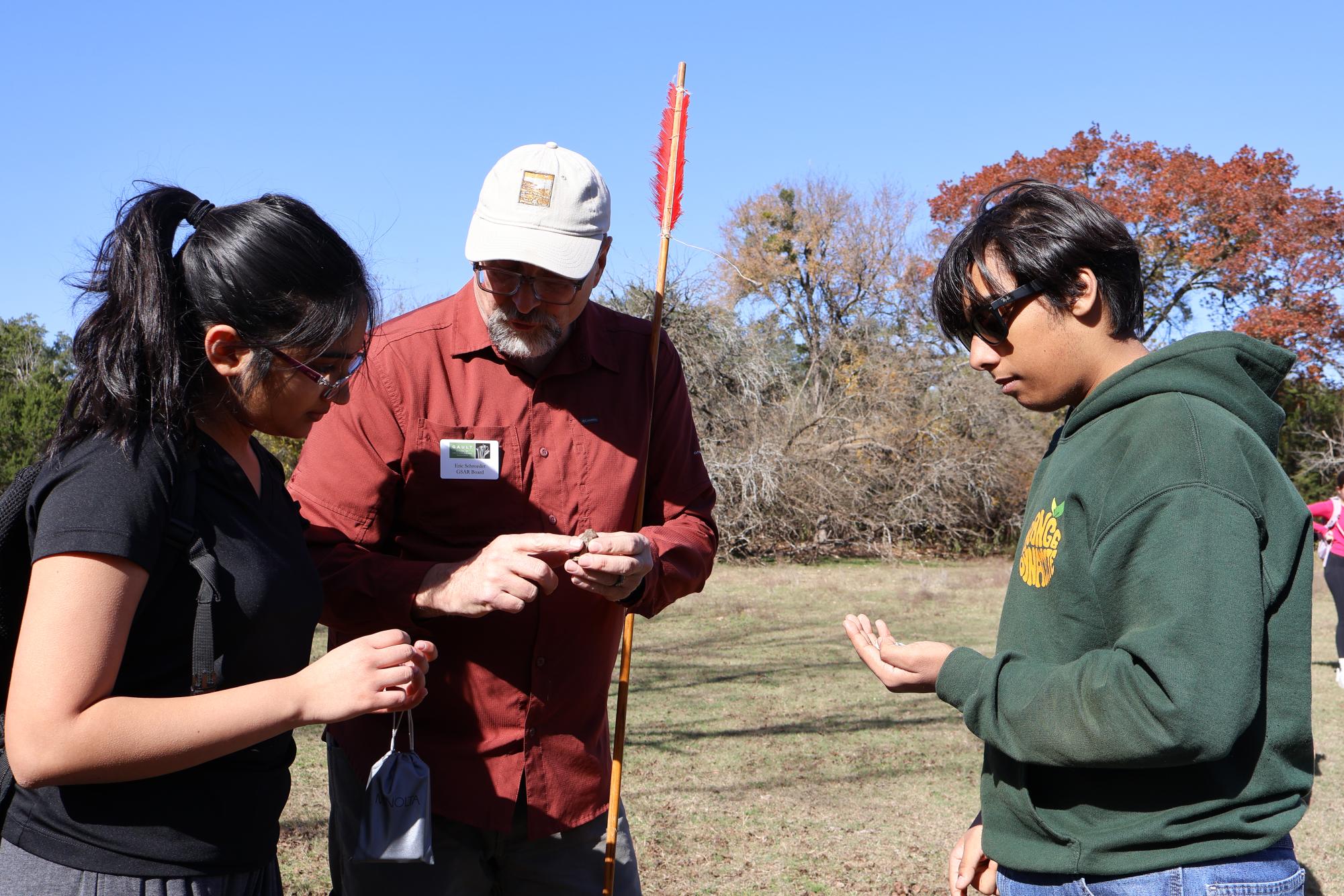
Looking on attentively, seniors Uma Sthanu and Souren Uchat listen as the tour guide explains the archeological significance of the rocks they’ve found. Near the end of the experience, students were encouraged to search for artifacts that could be found throughout the site.
-
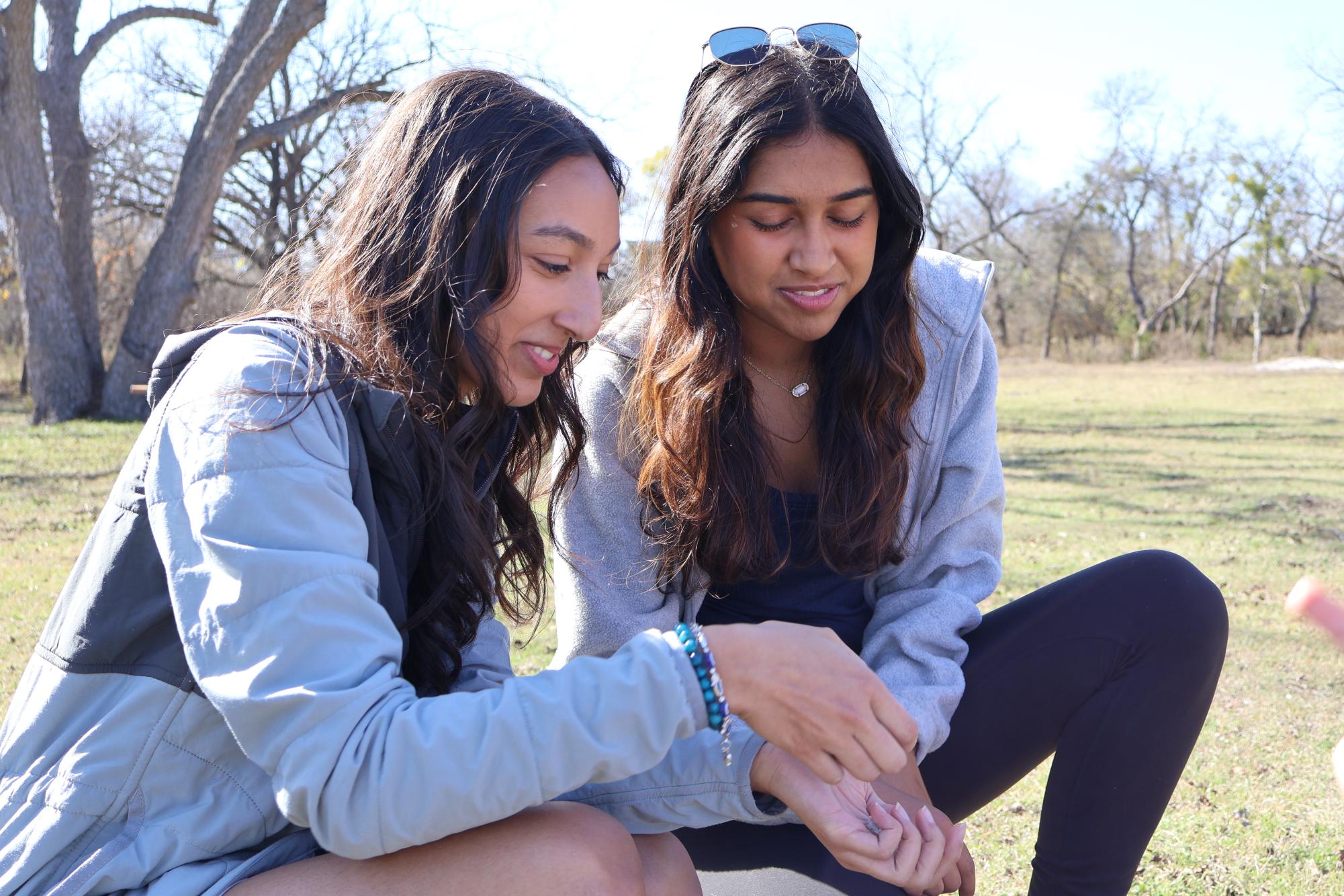
Crouching down, seniors Anushka Gupta and Satchi Patki gather rocks. There was an abundance of chert at the site, a flint-like substance that the Clovis people used for weapons.
-
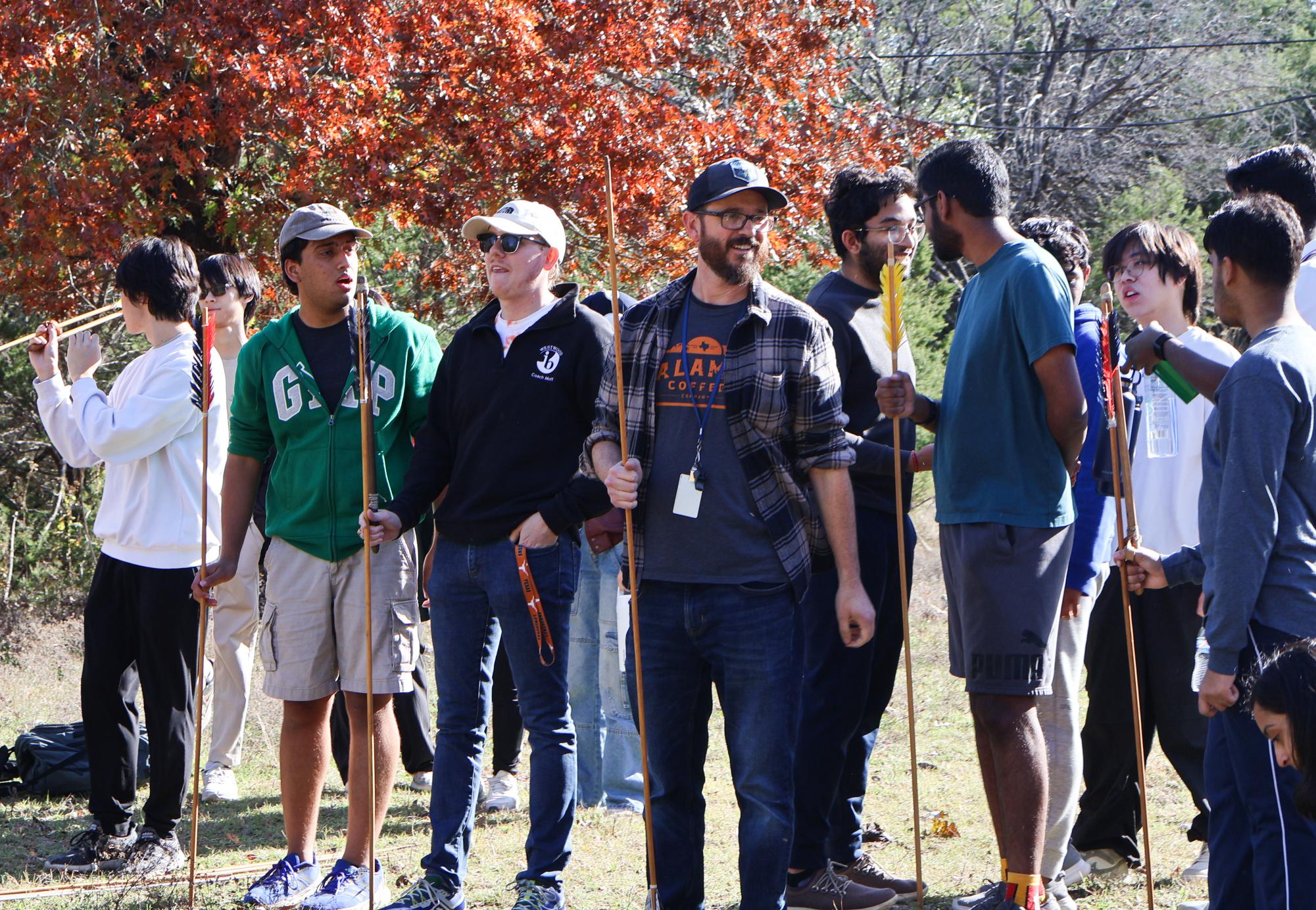
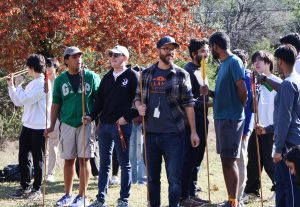
Lined up, students and teachers wait to throw their atlatls. An atlatl is an ancient spear used by the Clovis people, and students had the opportunity to test it on a plastic deer.
-
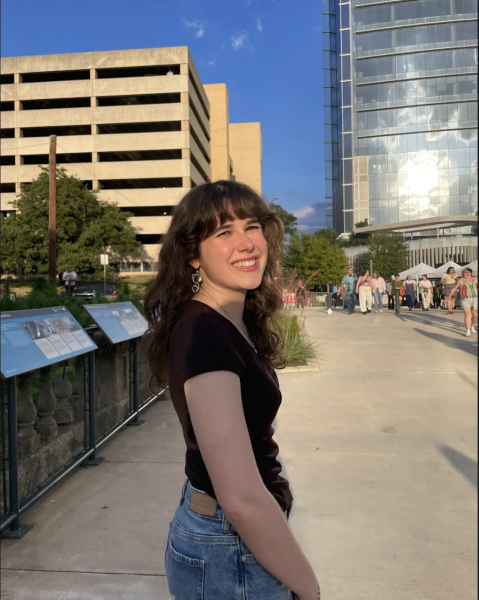
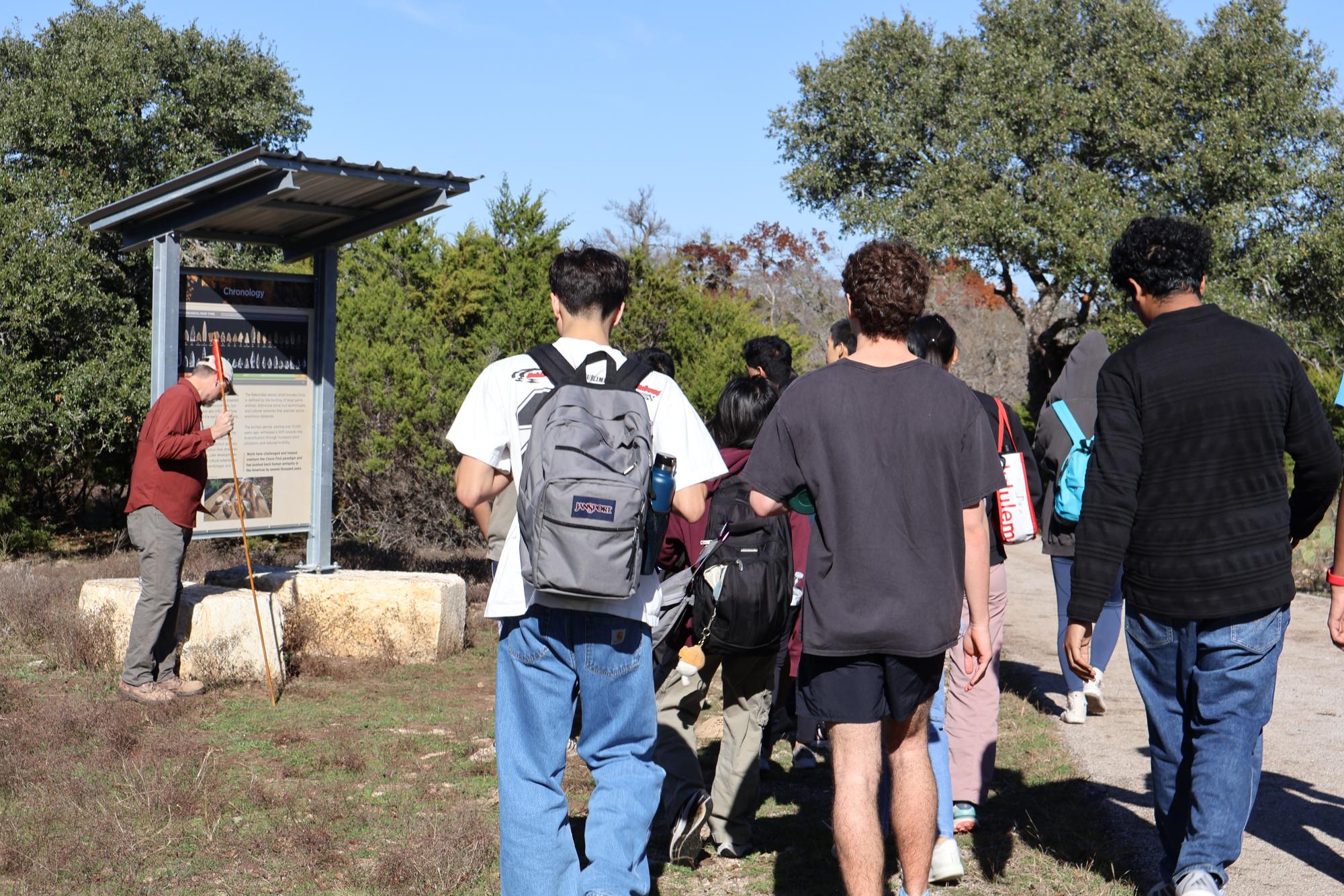
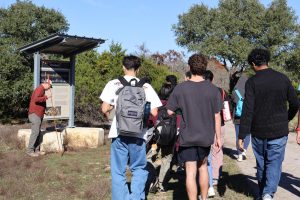
Walking, seniors Sundar Carey, Kaan Anilturk, and Arnesh Chatterjee move towards the first station. Each station focused on a specific aspect of either history, geography, or excavation techniques.
-
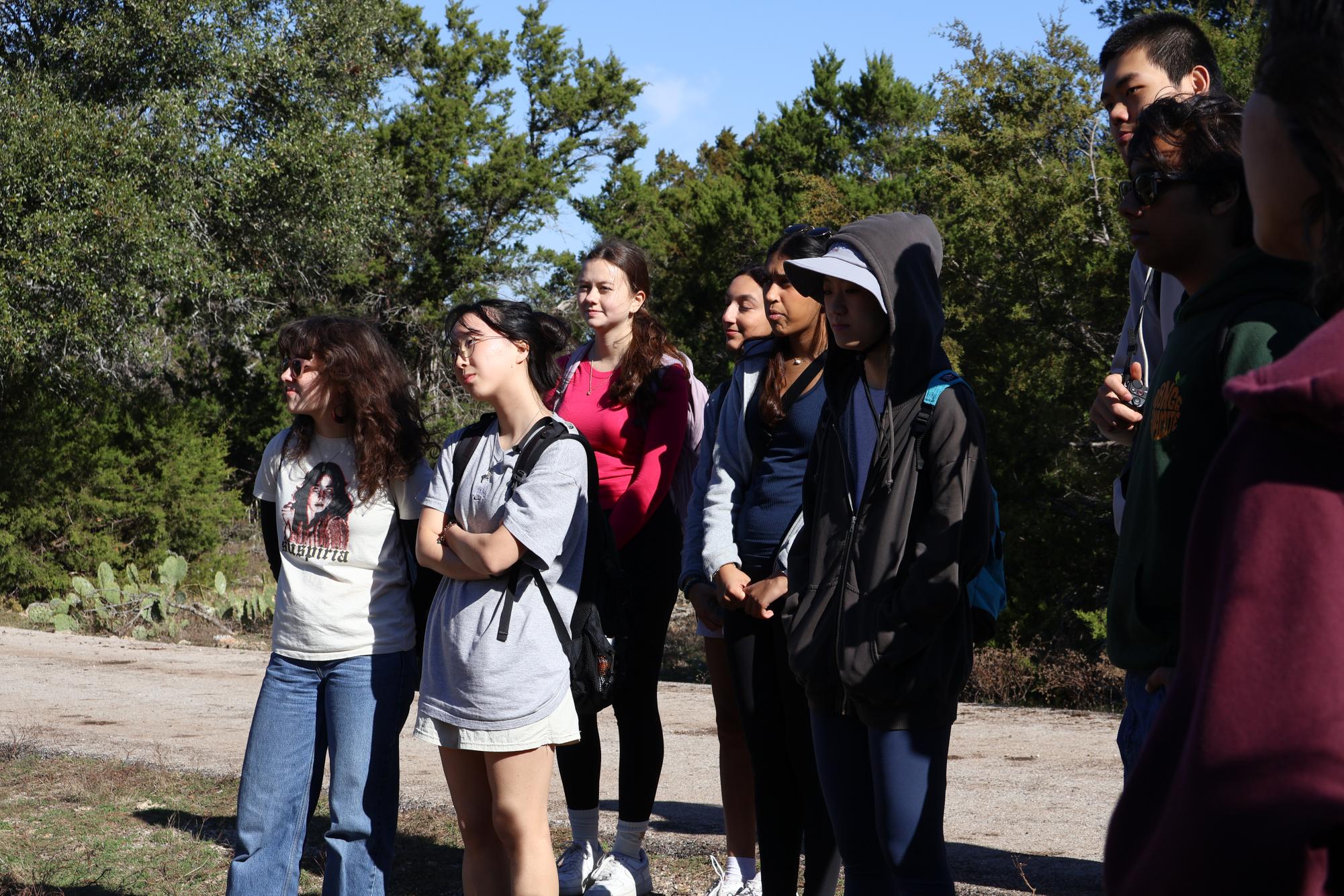
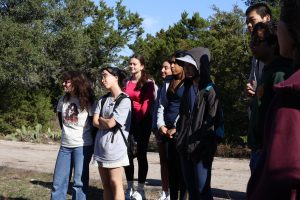
Looking on, IB students listen attentively to their tour guide. The groups were assigned based on TOK class block, furthering the camaraderie students had built over the year.
A long-standing tradition, International Baccalaureate (IB) program seniors finishing the Theory of Knowledge (TOK) course ventured to the Gault Archaeological Site on Thursday, Dec. 18 in the culmination of two semesters spent exploring philosophical principles and questioning the world they live in. Spending the day learning more about the site, seniors bid the course farewell while incarnating the broad concepts covered in the class.
TOK is split across two semesters in junior and senior year, encourages students to examine the way they are taught to think and exposes them to myriad philosophical concepts. The Gault site is an archaeological site containing evidence of humans dating back around 20,000 years. Students were divided into groups with a tour guide who provided information on the site’s historical significance, geological components, and inventory.
“I think the most interesting thing is that the people who lived in the Gault site stayed there for a thousand years, I’m pretty sure,” Zuhair Amin ‘26 said. “I think that’s important [to recognize] because if you think of the time frame a thousand years, maybe in our head we’re like, ‘they should have had XYZ innovation, they should have had this much progress,’ but to me, it’s impactful because they found the way of life that they loved and they stuck with it. To me, that represents true progress and true civilization.”
While students had studied the history of civilization in Central Texas throughout TOK, the Gault site was an opportunity for hands-on learning from experts in the field.
“There’s so much you can learn in classroom learning, but there’s no substitute for going out and seeing things with your own eyes and actually processing the world around you,” Tanmayi Thallapureddy ‘26 said. “Books and passages and movies and all those are great, but I think you really need to get out and see things to really know them.”
The anthropological significance of the site tied into one of the primary themes of TOK’s second semester: investigating the history and culture of Central Texas and exploring why our specific society came to be through the Oikos projects. Oikos, the Greek word for “home”, was a monthslong endeavor involving research and creative components that came together to form a documentation of why Austin exists the way it is today.
“I feel like even though I’ve lived here for pretty much my entire life, I never go out and try to explore and see more of the city,” Thallapureddy said. “[Oikos] was a really great opportunity for me to learn more about that and also to see how everyone else in my class values our city.”
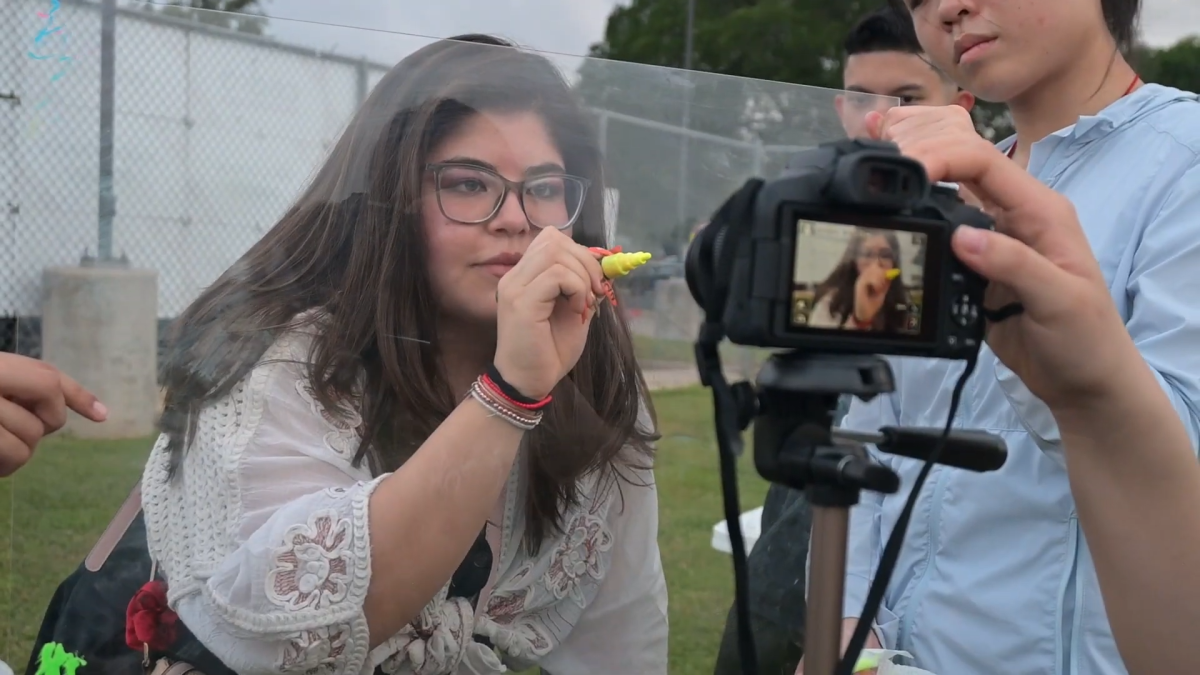
The creative portion of Oikos was left open-ended to encourage students to think outside the box and come up with a project that was unique to their lived experiences in Austin. As a result, projects ranged from films to scrapbooks to murals.
“My personal Oikos project was a scrapbook in which my friends and I sort of visited all the different aspects of Austin, and we really tried to focus on the people side of it and learning from people’s stories to form a complete picture of what the city is and how it came together,” Aarya Kale ‘26 said. “I think it was really nice to go personally and visit the settings that gave rise to the people in them and how the interplay of that formed the city that we live in.”
The Oikos projects were representative of TOK’s values, which ultimately encourages students to be more open-minded and approach the same topic from a wide range of perspectives.
“I think TOK taught me open-mindedness as well as curiosity,” Amin said. “Understanding the things that you don’t know is just as important as understanding the things you do know. I think [a cool aspect of TOK] is that it teaches you curiosity rather than that you need to know all these things in order to be educated.”
As seniors move on from TOK and IB juniors begin, the principles and skills they’ve honed across the semesters will hold significance across academic disciplines.
“[TOK has] taught me to be a little bit deeper in my learning,” Kale said. “TOK is very much more personal and really made me question the world around me, who I am as a person, which I think is an important life skill that you should carry much farther than academics in school. Throughout the discussions, no matter what the topic was, I just really enjoyed being able to dissect it with everyone and listen to all those perspectives. [What I learned was being] able to challenge [perspectives], but challenge them thoughtfully and build connections through that conversation.”