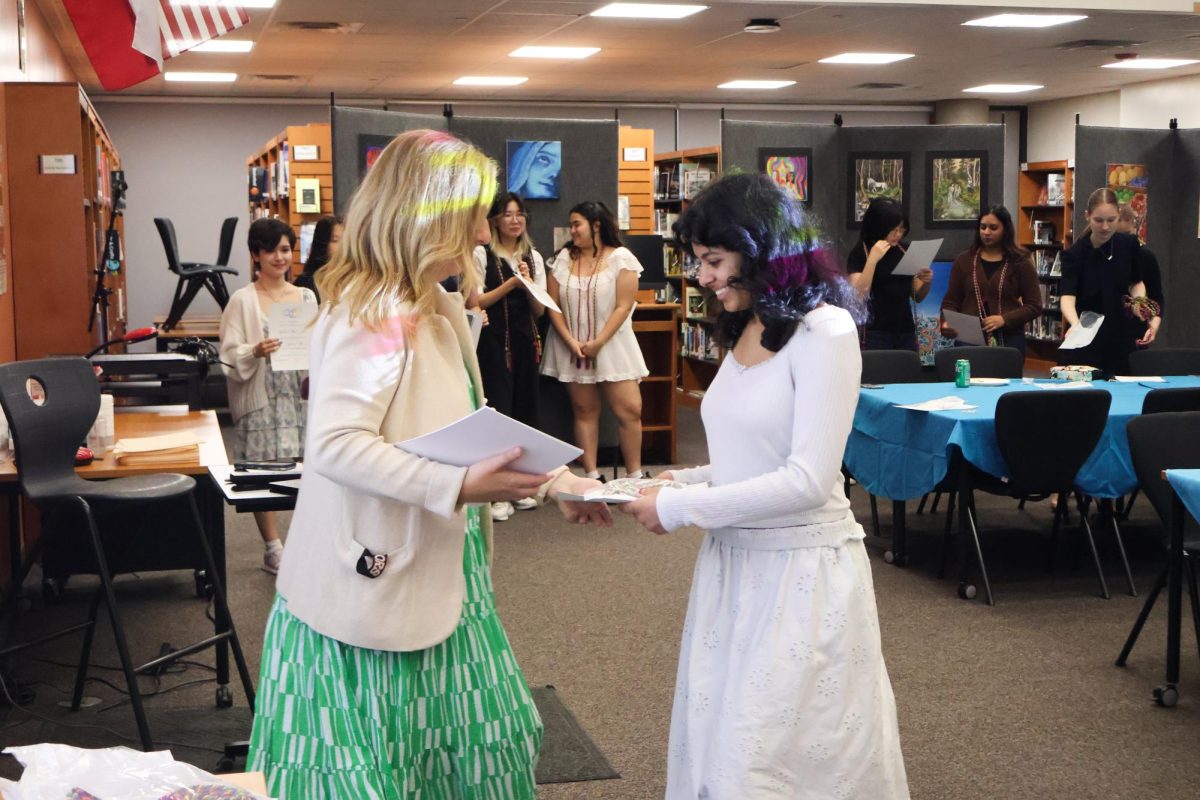
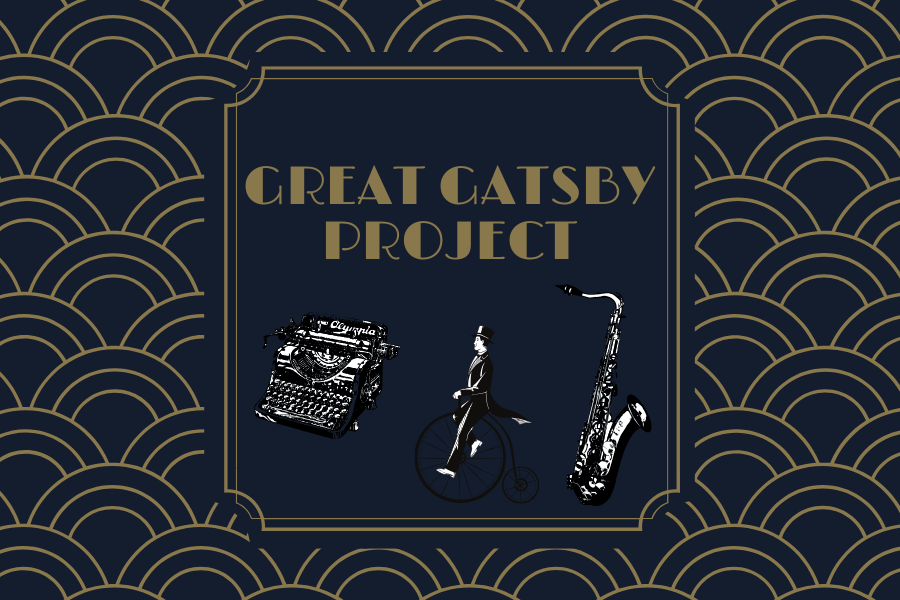
Surrounded by tassels and jazz music, the on-level English 3 classes participated in the annual Great Gatsby 1920s walk through in the library on Wednesday, March 4, and Thursday, March 5, during class time. Students attended the exhibit upon completion of The Great Gatsby by F. Scott Fitzgerald, their class reading, to broaden their understanding of the book’s cultural environment.
The exhibit opened with a group discussion in the Great Room, where librarians gave an overview of the stations. Afterward, English students split into groups and explored the stations surrounding the library. The stations provided students with a peek into the culture and day-to-day life of the 1920s working class.
“I just think [doing the Charleston dance is] a good way to spend energy,” Lidia Allen ‘27 said. “This whole time I’ve been walking, just wandering around doing the dance.”
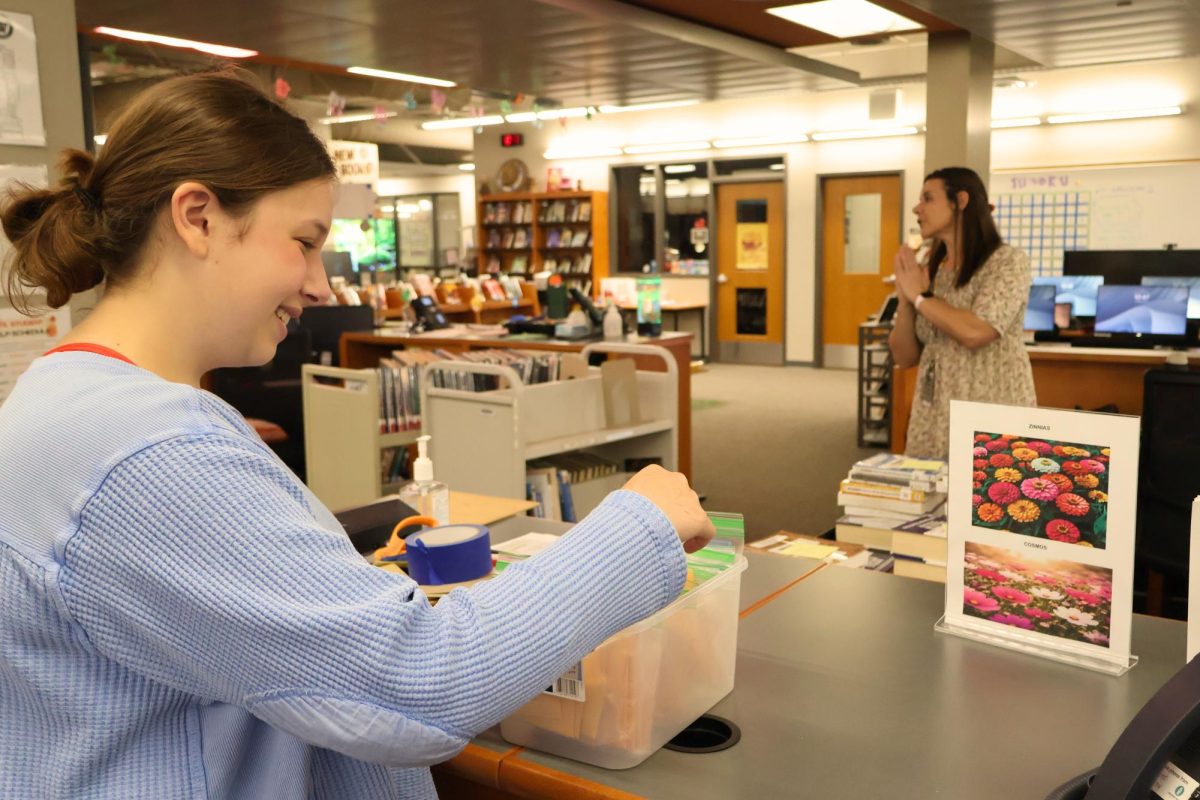
The display had five stations, all portraying a different component of the era’s atmosphere. The five stations were a Charleston dance tutorial, examples of jazz music, samples of 1920s clothing, cutouts of 1920s slang, and innovations of the time. These stations were both educational and interactive, with hands-on activities like a typewriter students could experiment with and fun games like an invention guessing game.
“There are items in the back where we can guess what [was] used [in the 1920s],” Delilah Carlos ‘27 said. “I didn’t catch one because it looked off until I realized very quickly it was a toaster.”
During the walk through, students gained an in-depth understanding of the different components that made up the 1920s era in The Great Gatsby. During their walk through, students noted interesting details at each station. To conclude the event, students met in the library’s Great Room to discuss their findings with their classmates. This display allowed English 3 students to dive deeper into the world of The Great Gatsby as they completed the book.
“The event right now, what we’re doing is more of understanding the 1920s, The Great Gatsby, [and] why the characters are influenced by the events of the 1920s, like the slang, the music, the history of it, the war, the migration, [and] the economy,” Carlos said.