“It’s my first time being Chinese” is the new catchy saying circulating around the internet, said with a playful wink or proud smile. It’s my first time being Chinese too, but I was called slurs, had people pull their eyes back at me, and was constantly misidentified for other girls just because they were also Asian. For years, I was told “You’re pretty… for an Asian,” “Are you eating dogs?” and “You must be good at math,” but it’s water under the bridge because suddenly the media says being Chinese is aesthetic and beautiful. It’s as if, overnight, the culture I was ridiculed for has become the latest trend.
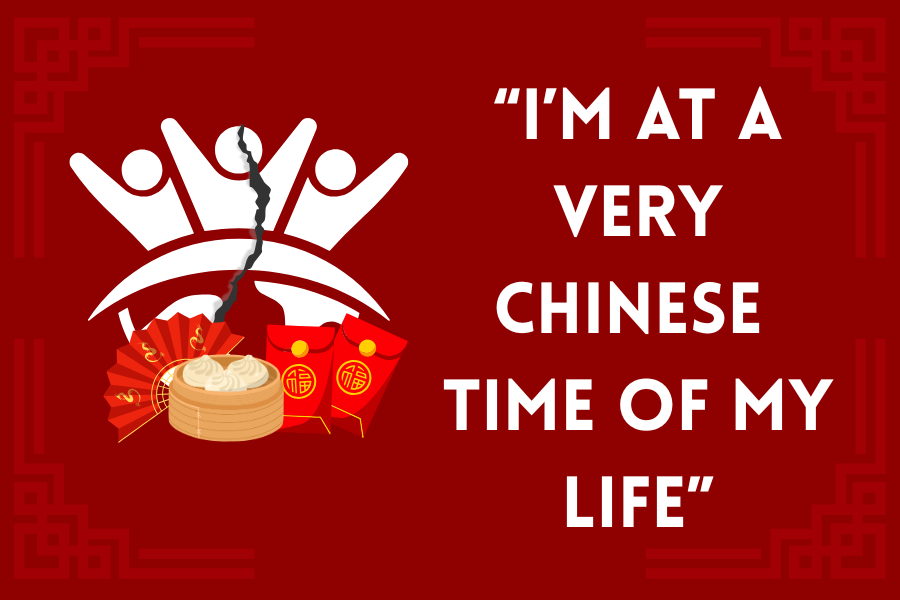
Across countless social media posts, phrases like “I’m at a very Chinese time of my life” have exploded in popularity. Encouraged by an Asian influencer, people are now “Chinese baddies” because they put lemons in hot water or wear slippers around the house. At first glance, these trends seem playful, funny, even empowering. They feel like a way to reclaim and embrace identity in a world that often rejects it. Yet, beneath the surface lies a troubling pattern of vibrant, centuries-old traditions being flattened into caricatures and catchphrases. This fad strips away the deep histories and lived experiences that shape Chinese identity, replacing them with shallow stereotypes and assimilating them into popular culture.
I’ve lived with the weight of this oversimplification for years. When I see these trends masquerading as cultural appreciation, it feels jarring – almost like a slap in the face. The question I constantly ask myself when I see the trend online is, “Why now?” Where was this fascination with “being Chinese” during the pandemic, when xenophobia surged, hateful rhetoric challenged communities, and I became fearful for my family’s safety? Where were the celebrations when Chinese restaurants were vandalized, people shouted “go back to China” in the streets, or when Asians were attacked for simply existing? This performative enthusiasm for Chinese culture feels hollow and disconnected from the real struggles and histories that define it.
These hashtags encourage cultural appropriation and mockery more than genuine respect. They invite people to cherry-pick customs and symbols – capitalizing on Chinese New Year, donning clothes similar to a cheongsam, or partaking in tea ceremonies – without understanding their significance or context. It becomes easy to reduce rich lifestyles to a few exotic props, stripping away the dignity and depth behind them. These age-old traditions are not just Instagrammable moments but are rather rooted in centuries of philosophy and social meaning. This kind of behavior perpetuates harmful stereotypes, reinforcing exoticized views of being Chinese as a spectacle rather than a living, evolving identity.
The danger is not just in the surface-level appropriation, but also in the erasure it causes. When culture becomes a sensation, it often leaves behind the voices and experiences of those who live it daily – including my family of immigrants. It glosses over the countless stories of Chinese communities, the struggles against discrimination, and the fight to preserve our language and traditions in foreign lands.
Truly embracing a culture means embracing all of it and not just the pretty, palatable parts. Culture is messy, complex, and sometimes challenging. It includes the foods that might seem weird and unfamiliar, the customs that don’t fit neatly into popular aesthetics, and the everyday realities that shape people’s lives. A viral video of a couple mocking food names in an Asian grocery store perfectly captures the gap between superficial obsession and genuine acceptance. Actually honoring culture means stepping beyond comfort zones and respecting the parts that don’t immediately conform to mainstream expectations. Without this fullness of embrace, cultural appreciation risks becoming nothing more than a performance.
In a world increasingly connected by digital worlds, culture can be a bridge and a way to foster understanding and empathy across borders. However, it must be built on the foundations of empathy, education, and humility. Otherwise, we risk turning diverse heritage into a fleeting hashtag and viral meme. A culture is not a costume to be worn for a day and discarded the next; it’s a living, breathing tapestry woven through generations, full of complexity and beauty.
In order for us to properly admire various cultures, it requires intention and effort. It means listening to those who live the culture, respecting their stories, and acknowledging the pain beside the beauty. It means recognizing that identity is not a costume or momentary aesthetic, but a profound and ongoing journey.
Being Chinese is not a trend. It’s full of endless stories, struggles, and celebrations woven into who my family and I are, and it deserves more than a disingenuous, passing viral moment.