
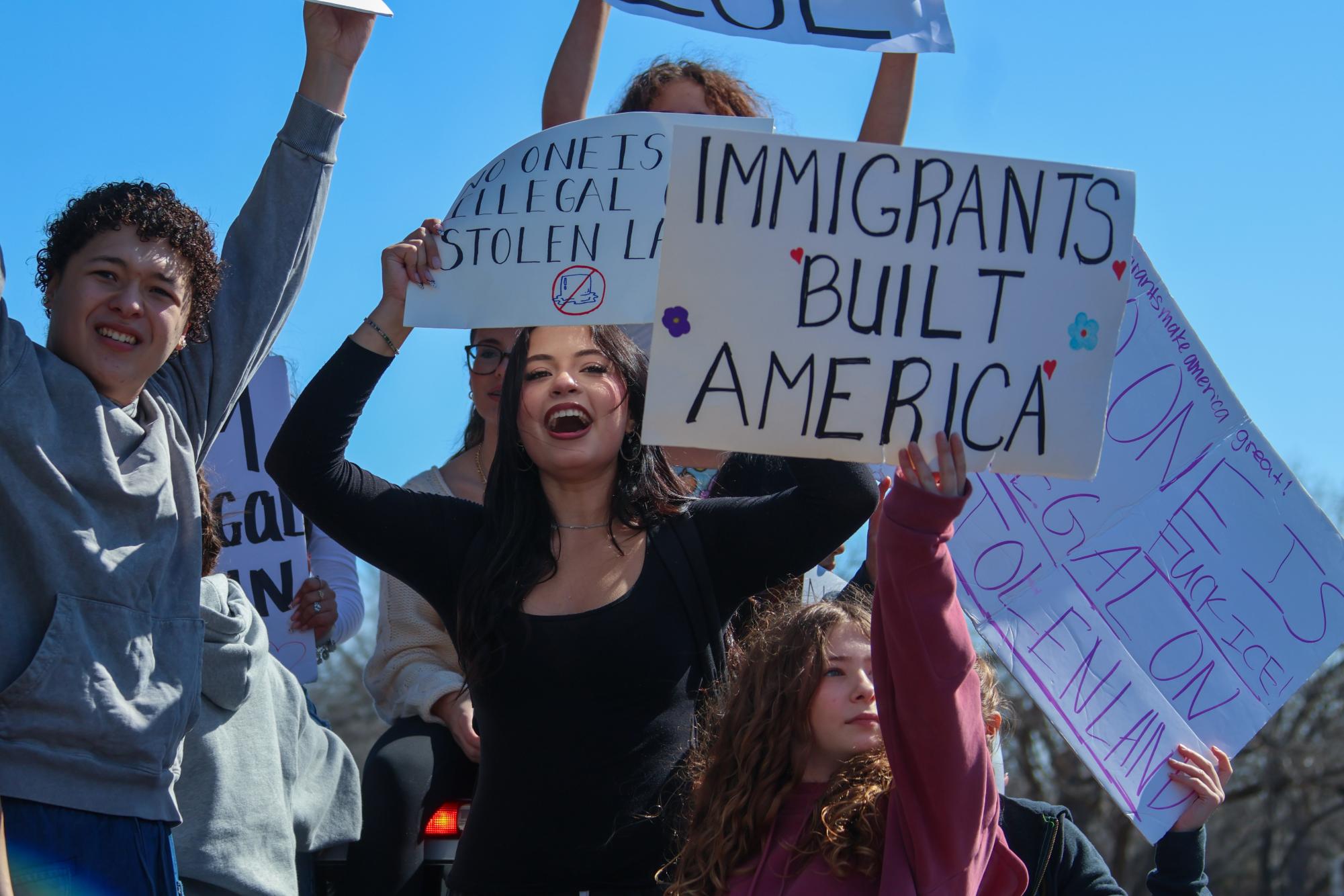
![Holding a sign, Tyler Martinez '26 voices disdain for ICE. The words on the sign directly translate to "We are humans and Americans. ICE out," in Spanish. "[The walkout] made me feel like my voice was heard [and] that so many people agree that what ICE is doing is wrong," Martinez said. "It’s really nice to see the community come together and protest something we all agree on."](https://westwoodhorizon.com/wp-content/uploads/2026/02/EDITED_26-02-04_AntiICEWalkout_VedantiPatil-17.jpg)

Chants of “ICE Always Melts” ring out at the first student walkout protesting Immigration and Customs Enforcement (ICE) involvement in school districts from 10:30 a.m. to around 12:15 p.m. on Wednesday, Feb. 4. Students embarked on a roundtrip from the band pad to Mojo Coffee, where they protested at the shop before returning to campus.
The walkout was organized by Westwood ANTI-ICE, a student-led movement not affiliated with the school, and headed by Ella Gonzales ‘28 and Sara Boudni ‘29 with volunteered help from Leif Ramirez ‘28, who created the Instagram account and social media flyers: the primary form of advertisement and communication for the protest. Motivated by the lack of action against ICE, Gonzales and Boudni decided to take action and organize the protest via Instagram and asking their friends to spread the word.
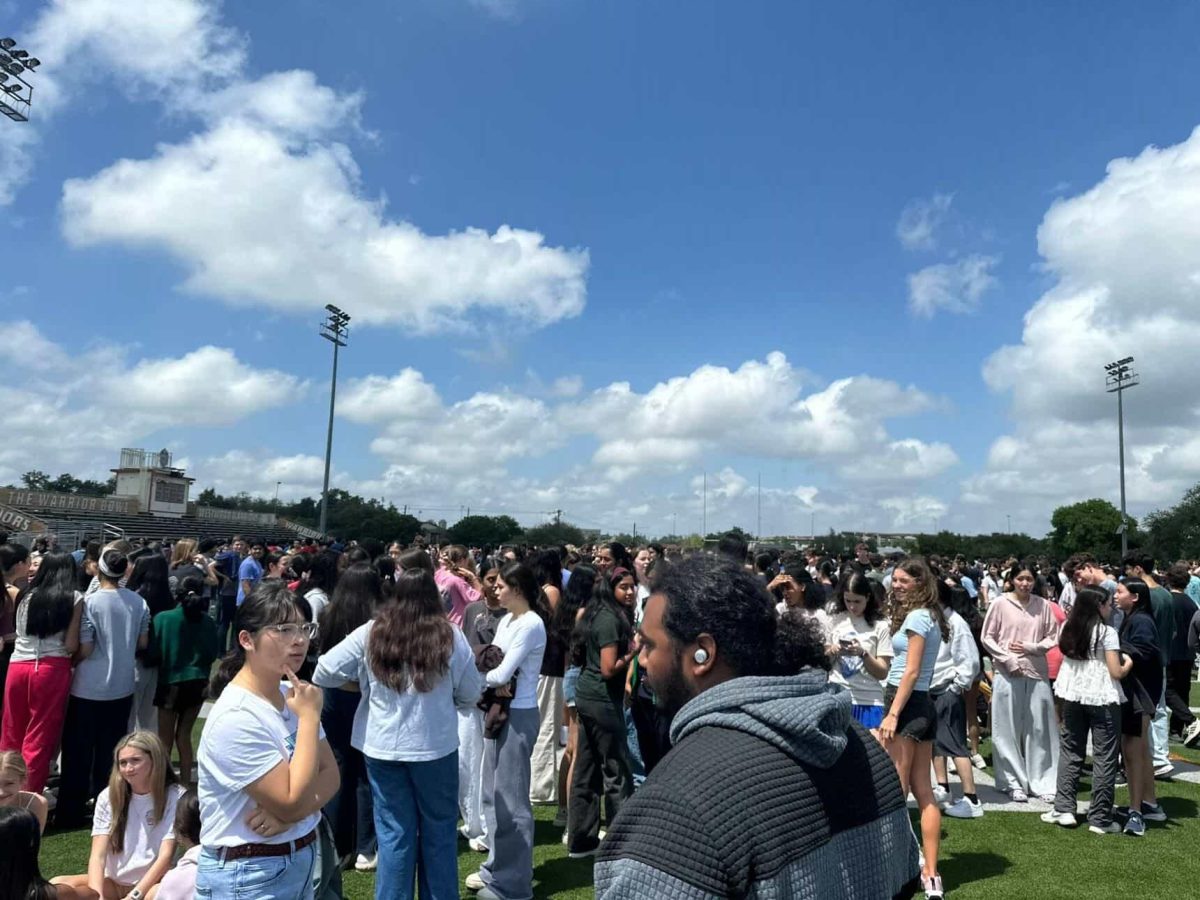
When over 100 students arrived at the band pad, Gonzales, Boudni, and Ramirez were standing in a truck to direct protesters to travel down the path to Mojo Coffee. On the way to Mojo Coffee, they passed by Grisham Middle School, where people opened windows and came out in support of the walkout. Though they planned and advertised the walkout less than 48 hours in advance, masses of students showed up, holding signs, waving flags, blowing whistles, and chanting slogans in protest of ICE. Some took to the sidewalks while others gathered in cars, honking in support.
ICE’s recent presence and detainment in school districts, particularly in nearby school district Austin ISD sparked this walkout. A federal law enforcement agency responsible for upholding U.S. immigration law ICE has taken the lead in carrying out President Donald Trump’s administration’s mass deportation initiative. As of Sunday, Jan. 25, ICE has detained over 73,000 adults and children in active detention facilities.
Students have encountered and been taken by ICE near bus stops, as well as before and after school, receiving little to no protection from districts barred by laws dictating they must cooperate with law enforcement. With Westwood’s diverse student demographics, including over 38% Asians and 18% Hispanics, many students express fear of ICE involvement in the school. The walkout was intentionally held during the school day so students could make the decision to skip school and be counted absent. Since school funding is proportional to attendance records, many school protests aim to directly disrupt that funding pathway as a form of organizational resistance.
Gonzales and Boudni express desire to hold more protests and encourage students to make their voices heard at other opportunities, including the districtwide anti-ICE protest on Friday, Feb. 13, connecting activists across Westwood, Round Rock, and McNeil. Collaborating with other student activists, the Westwood ANTI-ICE Instagram posted on their story that protesting is not “one and done.”
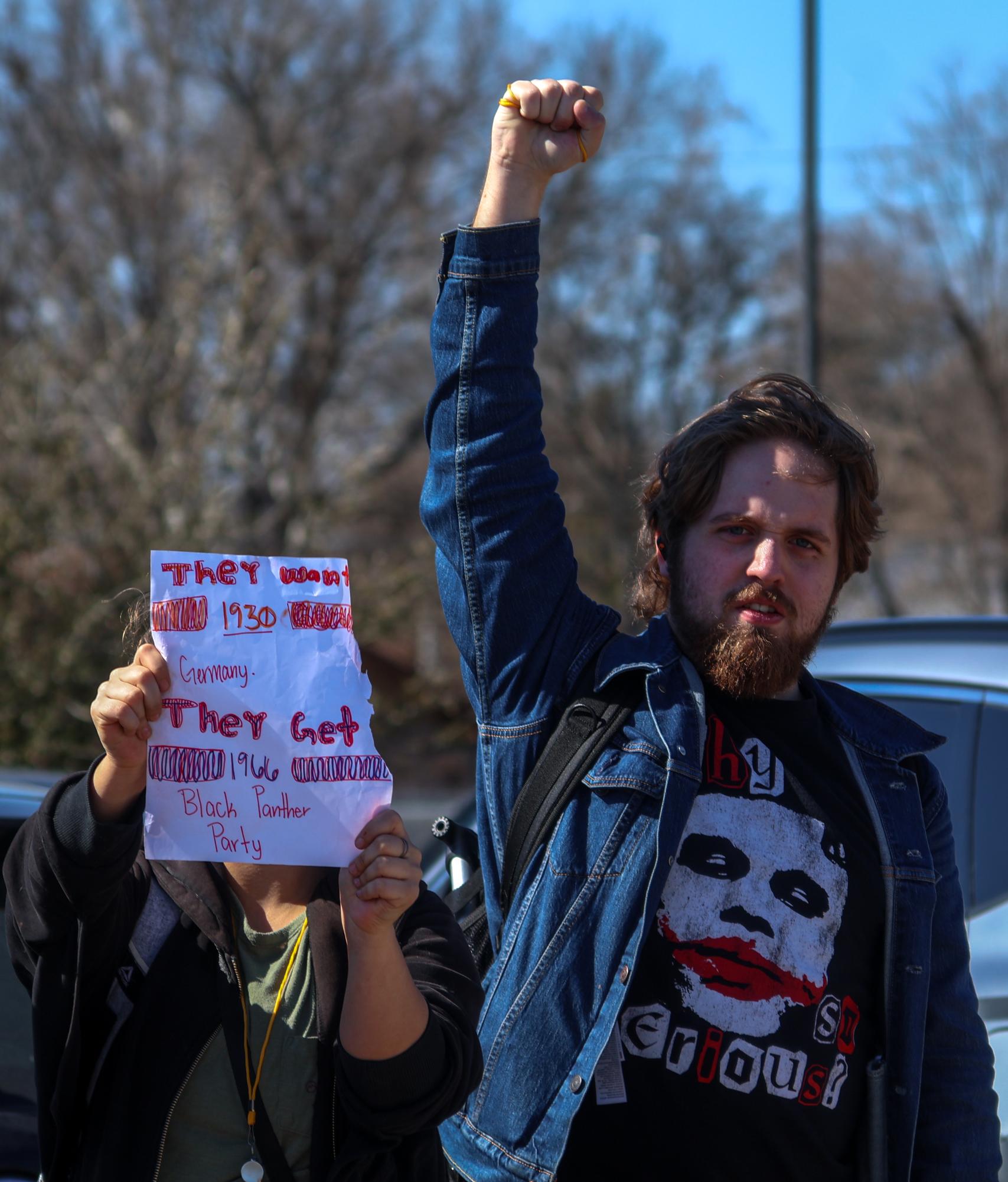

Endless students surged into the streets, vibrant signs proclaiming “Immigrants Built America” and “Families Belong Together” held defiantly against the sky. Voices rang out steady and unwavering, driven by deep conviction and a shared sense of purpose as they marched forward. This wasn’t just a crowd; it was an influential movement fueled by youthful passion and unshaken determination. Student activism like this is not only vital to combat issues in the short-term — it represents one of the most effective ways young people can shape the future of their communities and democracy itself.
In recent weeks, a wave of student activism has swept schools throughout the country, marked by protests and walkouts against Immigrations and Customs Enforcement (ICE). Student activism matters because young people speak from a perspective that resonates uniquely with their peers. Unlike adults, who often struggle to engage with younger generations on political issues despite best attempts, students communicate with immediacy and relatability. Their messages cut through the noise of traditional political discourse, reaching audiences that may otherwise remain disengaged. This peer-to-peer connection amplifies their impact, making youth-led protests a catalyst for both awareness and action in ways adult protests sometimes cannot replicate. When students mobilize around issues that directly affect them, their involvement brings fresh urgency to fight for social change.
“I’m not the type of person to want to stand idly by while people get hurt,” Vincent Zhang ‘26 said. “This [protest] is the first of many steps needed to make a real change.”
At Westwood, this purposeful energy was unmistakable. The protest was carefully organized, with students demonstrating a clear understanding of the issues and a strong sense of solidarity with those affected by ICE’s presence. Although many Westwood students may not currently fit the demographics most targeted by immigration enforcement, the disruption faced by their peers creates a real fear of what could come next. This shared concern fuels a determination to oppose policies that threaten their community’s safety and stability. Students used social media to highlight how ICE impacts daily life, education, and security, emphasizing the need for schools to remain safe spaces free from fear and government intrusion.
“We want to stop [ICE] from coming to schools because this is supposed to be a safe place where we can learn, go to school, go home, the gists of America,” Ella Gonzales ‘28 said. “We just want to be safe, but we’re not being given rights right now [to be able to do so], and we want to spread awareness [about] that and have the districts [protect] schools in Austin from deportation. We have seen [ICE involvement] a lot in Anderson, McNeil, a lot near here, Round Rock too.”
Moreover, student protests like these become catalysts for broader social conversations. They push issues into the public spotlight, challenge complacency, and encourage dialogue across generations. The energy and clarity of youth activism often compel media attention and political response in ways that other forms of protest might not. This visibility is crucial for advancing causes that might otherwise remain marginalized or misunderstood.
“It’s okay to speak up, and if there’s change in the world, we have to be the ones fighting for it,” Sara Boudni ‘29 said.
Student activism also creates a critical space for students from immigrant backgrounds — particularly Asian American students — who may face cultural or familial pressures that discourage political engagement. For many, participating in school-organized protests offers an opportunity to express their views and advocate for justice in ways that may not be possible at home. This engagement fosters empowerment and belonging, helping to break down barriers imposed by traditional immigrant parents. Importantly, these protests ignite ongoing conversations within families and communities about identity, rights, and social responsibility. Each event spurs multiple meaningful discussions that deepen awareness and inspire continued engagement beyond the protest itself.
“Usually, most Asian people aren’t really expected to participate in these types of protests,” Zhang said. “[That] makes it all the more incredible that such a large proportion of the protest was made up of demographics that aren’t usually expected to do things like this. It shows that this movement has moved past what’s expected and instead moved to what’s right.”
The Westwood walkout also underscores the importance of protecting the right of peaceful assembly. Despite facing hostility — such as water balloons from counterprotesters — students remained steadfast. Their resilience in the face of opposition reflects a deep commitment to democratic principles and social justice. It also serves as a reminder that youth activism is not only about raising demands but about exercising fundamental rights that strengthen society as a whole.
“[Water balloons being thrown] also showed the contrast between how we were protesting a lot more peacefully and verbally,” Ian Schultz ‘29 said. “They’re protesting a lot more physically and that just shows the difference between our values.”
Beyond the immediate impact of awareness campaigns, student activism develops invaluable leadership skills and a sense of agency. By organizing events, speaking publicly, and collaborating across diverse groups, high school students learn to navigate the social and political landscapes they’ll be part of in just a few years. In this way, student activism not only addresses the urgent issues today, but also builds the foundation for a more engaged and compassionate tomorrow.
“We are the future,” Gonzales said. “It’s very important that we get our voices and our opinions out there, and it’s a great value to [have] at this school. We just want people to be able to express themselves, and we need Westwood support to do that.”
Student activism challenges the notion that younger people are apathetic or disengaged. In reality, these movements reveal a generation deeply concerned with justice, equity, and the future of their communities. Their involvement breaks stereotypes, and importantly, demands that policymakers and society at large take their voices seriously. By stepping into the public arena, students assert their place as key stakeholders shaping the world they will inherit.
“I went to the ICE protest because I am strongly in opposition of how ICE is currently unfairly detaining and hurting [or] even killing people and not having any consequences for the most part,” Zhang said.
The anti-ICE protest was more than an event: it was a movement. It showed how student activism can harness hope, courage, and solidarity to confront complex issues and drive progress. In a world often divided by cynicism, these young voices offer a vital reminder: change is possible when we stand together with intention and heart.
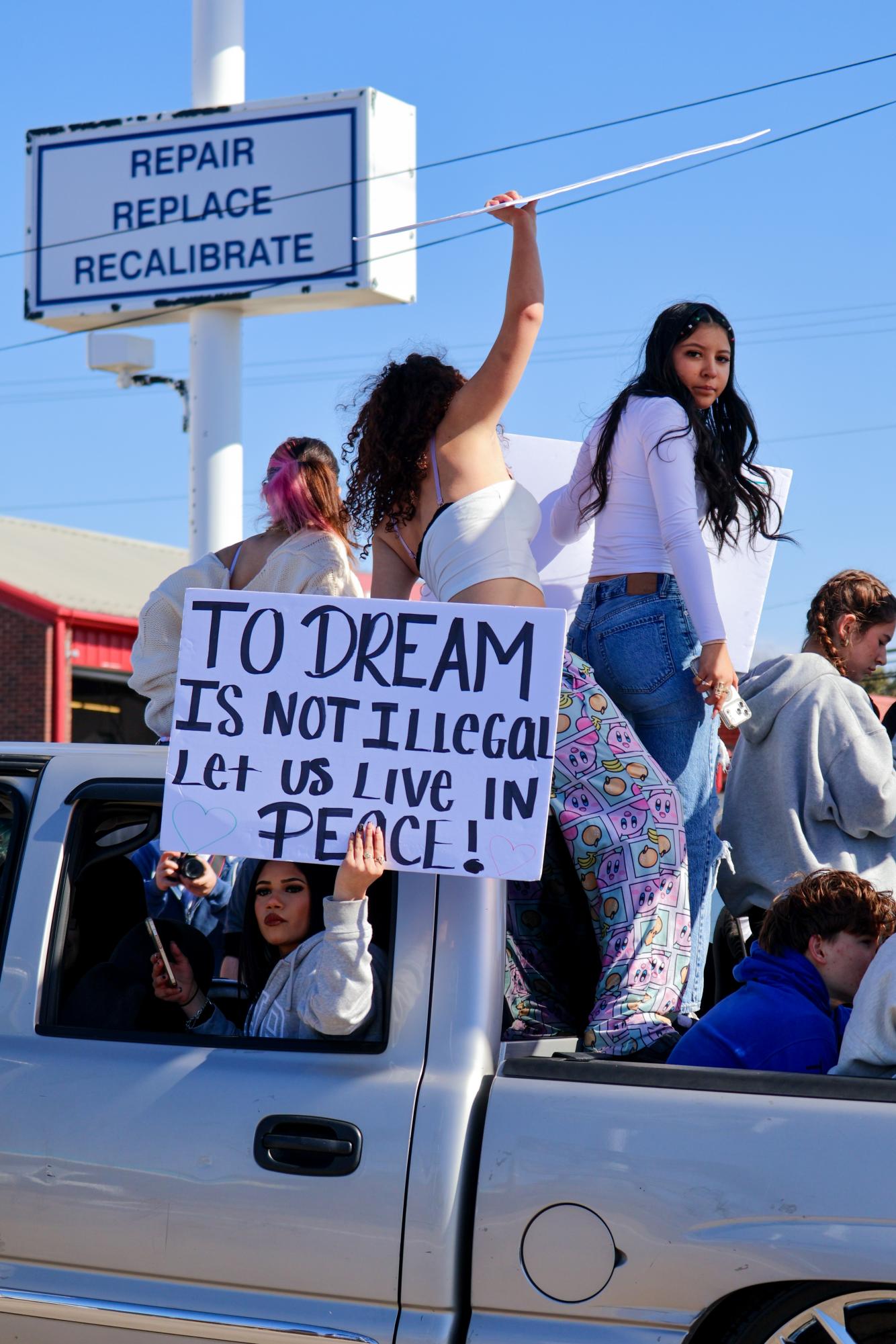

Countless students outside. Big signs and posters with statements like “Nobody is Illegal on Stolen Land,” and “Melt ICE” populate the sky, as determined young advocates march across the streets. However, in this sea of aspiring activists and future leaders, not everyone is particularly genuine. A halfhearted student to the side, only there to avoid taking a calculus quiz they forgot to study for. Another student in the middle of the crowd, confused as to what they’re really advocating for, but marching nonetheless because their friends are there. This scene from the anti-ICE protests at Westwood showcases the unfortunate reality of student-driven efforts and advocacy.
The intentions of the protests are undeniably noble. They’re a valiant effort to check overreach by the Immigration and Customs Enforcement (ICE) in an era where speaking out is more important than ever. Yet, student-led protests are not without their issues. The lack of bandwidth and resources that youth organizers have led to organizational and structural issues, and often leads to many treating the protests as unserious and not worthy of real dedication or attention.
“I think that leading protests can be very good, but there’s also big potential for these protests to go downhill, become commodified, and be performative,” Aanya Ujjval ‘26 said.
The second students start treating real opportunities for change as an excuse to skip class or hang out with friends, the reason for protesting becomes diluted. Conversations begin to circulate in the hall about how there’s an easy way to get out of class. “I’ll just go to the protest,” one student says: “I really don’t want to take that quiz.” Another exclaims how they “heard about the protest on Instagram,” but “aren’t really sure what it’s for.” Suddenly, almost like a twisted game of telephone, rumors begin to spread about the protest. Phrases like “Most people are just doing it to skip class anyway,” and “I don’t think anyone really cares,” begin to circulate. Ultimately, the good intentions of the many become lost because of the few.
Problems regarding disingenuous protestors were only magnified by issues with the protest’s structure, timing, and location. Though the nature of the school day leaves organizers with very few options that enable students to both be able to protest and be in class for valuable instructional information, organizing the protest during lunch at a coffee shop encouraged many to attend solely to hang out with friends at lunch and removed much of the sacrifice involved with typical protests. Sacrifice is at the backbone of any successful protest or form of resistance. It’s how advocates signal that they truly care about the cause they’re supporting. When protestors aren’t even willing to give up even small portions of classtime, it signals that many protestors don’t care, or at the very least, don’t care enough.
“Planning a protest during lunch means more people will be like ‘Oh, I want to go to Mojo’s [Coffee] too,’ and there’s no [real] sacrifice involved,” Ujjval said. “Sometimes protests will be at 3 a.m. outside a building, skipping the entire school day, or standing up unannounced in the middle of class. On the other hand, this form of protest during lunch invites a lot of people who aren’t actually interested in the motive [of the] protest of just planning to [leave class].”
On the flip side, many students on the fence about protesting chose not to go, fearing missing out on tests, in-class information, and potential disciplinary repercussions. In an academically intense environment, one missed test or class can be fatal for a student’s academic record. Leading a student-run protest during school hours locks out countless students who would otherwise be equally as passionate about their opposition to ICE.
“[Though I attended], I think what most people were scared of was skipping because of academics,” Mrunali Rajiv ‘28 said. “People didn’t want to fail their tests or have to learn things [at another time].”
It is here that the roadblock in student organizing becomes incredibly apparent. When you put together a group of people without many resources to organize, disingenuity, fear, and chaos run rampant. It’s hard for a group of students to effectively coordinate the protests, vet out protestors there for disingenuous reasons, and most importantly, ensure that students are safe.
“I had my back turned, but the second I turned forward, a water [balloon] just flew into my face,” Aiden Watson ‘27 said.
As students marched for a cause they believed in, exercising their First Amendment right to protest, they were met with a barrage of water balloons thrown by counterprotestors.
“I think that [it was] really immature, [especially] considering that it was students from our school who were throwing water at their fellow students,” Watson said. “At the same time, I think that when you’re protesting something, it’s natural to receive backlash, and that’s something [you know] may happen.”
Though the attacks didn’t seem to faze Watson himself, they do expose an unfortunate issue with student organizing. Though the attacks were undeniably awful, and cannot in any way be blamed on those at the protest, they ultimately reveal that when there isn’t a way to coordinate with authorities or higher bodies that can keep protesters safe, there’s always a risk of malicious actors getting involved.
“There’s always the chance of violence being induced, [because] people [have] really strong feelings about what [we’re] protesting, so [people could] always invoke violence,” Dylan McCarville ‘26 said. “There is always the chance of stuff going wrong.”
None of this is to say that students shouldn’t resist at all. However, the mechanisms they use to resist should be different. Without organization, structure, and overarching bodies that can help coordinate movements and activism, students run the risk of facing backlash and being infiltrated with less genuine participants, ultimately crowding out the ability for students to represent the causes they are passionate about.
Aesop’s famous quote, “united we stand, divided we fall,” has never rung truer. In an era of increased division, it is important to ensure that activists stay together in the fight against repressive forces. However, no amount of unity can overcome the sheer amount of difficulties thrown in our face and structural barriers that threaten to lock out youth organizing. We shouldn’t give up, but rather go back to the drawing board and find an approach to resistance that works. Be it organizing projects with larger groups, protesting outside of school hours, or working with lawmakers, youth advocates need to make real demands on institutions that materialize outside of one-off protests at lunchtime. Otherwise, our good intentions will remain just intentions, and our opportunity to create real change will die in darkness.
“There has to be follow up action with what the protests are doing. If you just protest and then it’s done, that means you’re not really changing anything,” Ujjval said. “I think to enact real change or influence and have a really big impact, you should have repeated protests, protests that lead to something else, or have some kind of deliverable that can actually enact change. The whole point of a protest is to bring attention to something, but once you bring attention to it, you have to do something else beyond that.”
Now, more than ever, the education of young journalists with integrity is critical to our democracy. Westwood Student Press works hard to bring you award-winning coverage of our school and community. Please consider showing your support for the student journalists of Westwood High School by making a donation in any amount. Your contribution will allow us to purchase equipment and cover our annual website hosting costs.