

“I won by one question.”
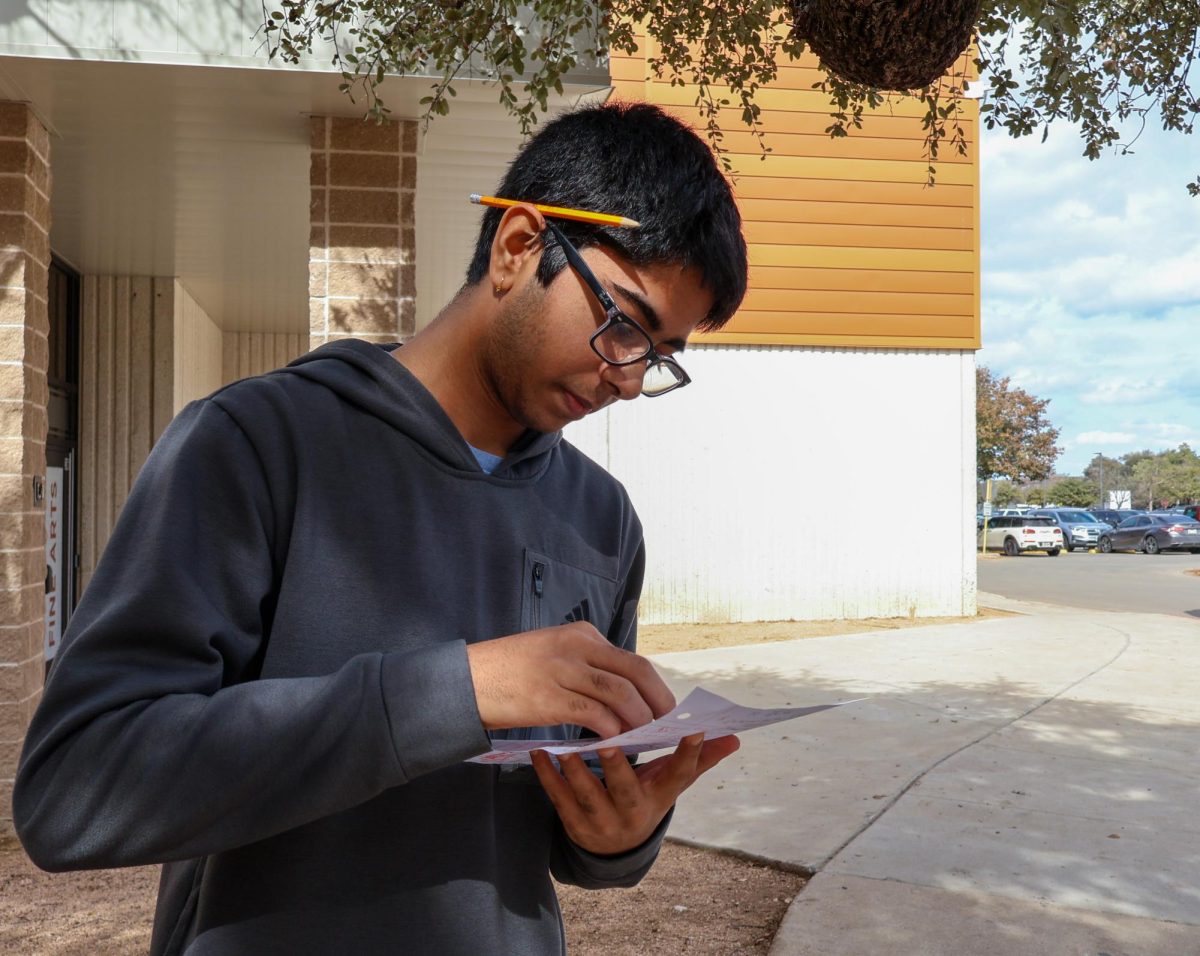
For Westwood’s first and only University Interscholastic League (UIL) Computer Science State Champion Siddhant Kameswar ‘27, nearly a decade of technical preparation culminated in this moment.
“I’m still in shock that I won because I definitely did not expect to,” Kameswar said.
It wasn’t just years of knowledge and skill-building that led to Kameswar’s UIL Computer Science State Championship, though.
“Passion is important,” Kameswar said. “I’ve been to so many invitationals before actually making it to state, and through all those, I don’t think I’ve gotten first, or even top three, at the majority of the invitationals I’ve been to.”
While many aspiring student programmers found computer science in middle school through coding classes or personal interest, Kameswar’s passion for computer science began with pizza in elementary school.
“My first memory of coding is me printing ‘I like pizza’ on the screen a bunch of times,” Kameswar said. “I read how to do that from a library book. During elementary school and early middle school, I would check out tons of computer science textbooks every week and just read them. I didn’t understand all of it then, but that definitely piqued my interest in [programming].”
In middle school, Kameswar pivoted to creating different projects to continue studying computer science. From creating an ad-free Quizlet alternative to programming a user experience-enhancing Schoology extension, he explored advanced user interface and design principles.
“A lot of the projects I did were websites and apps,” Kameswar said. “Through[out] middle school, my learning was through books or trying to make something. [If] I didn’t know how to do something, I would Google it, and over the course of the project, I would learn so much.”
Then, starting in high school, Kameswar began his UIL Computer Science journey — one that would take him further than he could ever imagine.
“In ninth grade, I was looking through the different Flex sessions available, and one of them was UIL Computer Science,” Kameswar said. “[My friend] and I participated in November and in January. Eventually, he lost interest in it, but I continued.”
Within each UIL Computer Science contest is an individual written portion, consisting of mostly multiple choice questions with a few free-response, and a team programming exercise, consisting of 12 open-ended questions prompting quick thinking for Java-written code solutions.
“[In 2024], the tests were significantly different from [2025],” Kameswar said. “They were much easier, so it was a lot harder to advance because there were a lot of really smart people getting really high, even perfect, scores, and when everybody gets a perfect score, even if you make a really small mistake, you can’t advance.”
In part because of the test difficulty, Kameswar didn’t advance to the state competition during his first year, though he performed well at the lower UIL District and Region level competitions.
“I decided to continue because of my relative success [freshman] year, and I just liked it, especially for the programming portion,” Kameswar said. “I really enjoyed writing algorithmic solutions to the various problems we got. That’s the main part of why I continue UIL. The individual test is there, but I really find joy in the hands-on programming.”
With a year of UIL Computer Science under his belt, Kameswar entered sophomore year with higher expectations.
“Throughout the year, we do multiple invitational [meets],” Kameswar said. “Those really help you prepare for the style of the contest. After that, [UIL Computer Science sponsor] Mr. [Jeff] Mickel picks a team of six [to] represent Westwood at District, and from [there], four of us advance to region. I expected [to individually advance] past District [this year].”
Kameswar didn’t just advance individually at District — the entire Westwood team placed first in the competition. The team score, composed of team members’ summed individual scores and the programming portion score, was higher than all other District 6A schools — an unusual feat that advanced the team to Region.
“I didn’t expect [us to] advance as a team at District,” Kameswar said. “I was expecting Round Rock or Vandegrift to do better. I think the seniors [on the other] teams last year graduated, or maybe there were some juniors who now are seniors, and they have higher priorities than UIL. It was surprising we were able to advance as a team.”
Along with Kameswar, the other three to advance to Region within the team were seniors Sam Yarbrough, Zaeem Saiyed, and Vishnu Mutharaman. The team practiced together in preparation for Region, building team chemistry through weekly team-portion practices.
“It’s really nice getting to know what individual skills and hobbies [my teammates] have,” Kameswar said. “Sam, for instance, does quite a bit of graphics programming, and that helped him solve a few hands-on problems. It’s really nice getting to know what our unique skills are and working together to solve different types of problems.”
Against the odds, the team took first place at Region after dominating the team portion of the meet — the first time a Westwood team had advanced to the State meet in about a decade.
“At Rregion, we’re competing with the schools from Austin ISD, and they’re really good too,” Kameswar said. “[However,] we solved more programming problems, significantly offsetting imbalances in our [individual] written scores.”
With the pressure on, Kameswar practiced individually for the month leading up to the State competition, applying his personal computer science experience to practice tests from Mr. Mickel and the internet.
“I did a bunch of practice tests that I found on the UIL website, but this year the tests were very different, so practicing was much harder,” Kameswar said. “One thing that really helped was [doing] a lot of coding outside of school. I picked up on non-traditional UIL concepts and they really helped this year. [Mr. Mickel has also] given us a ton of practice material, and he’s encouraged us. He tells us stories about teams that have previously succeeded.”
On the first day of the State competition, Monday, May 19, Kameswar and the team traveled for half an hour to the University of Texas at Austin for the individual portion of the competition. In a room of 151 students from all across Texas, Kameswar focused on the state-level individual exam.
“That State test was definitely the hardest UIL test I’ve ever taken,” Kameswar said. “It was different [because there were] a lot of conceptual things and software concepts you wouldn’t really associate with the more ‘competitive programming’ style of UIL. It threw all of us off.”
However, Kameswar was ready for this curveball in the test style. His prior decade of programming experience outside of the competitive sphere granted him the knowledge needed for those questions. Up against schools with reigning UIL Computer Science state champions, Kameswar took home the gold medal.
“There were one or two questions unrelated to what we usually see on UIL, and it was a concept that you would only be aware of if you’ve made apps or websites and been exposed to different software development practices,” Kameswar said. “I was able to get those questions correct; something gives me the feeling that that’s the reason I won, because it was a very narrow [win]. I won by one question.”
Despite his win, Kameswar and the team were focused on the hands-on portion the next day.
“My team and I were surprised because my score in isolation was not that good,” Kameswar said. “It wasn’t that I did well, it was just that everyone else did worse. We didn’t formally celebrate; I went home and coded. Though for me, coding is celebrating.”
Kameswar doesn’t linger on the fact that he’s state champion as a sophomore, unusually young for the feat. He has ambitions to continue in the next couple years.
“[The win was] a good start. I want to do well at state as a team rather than just individually,” Kameswar said. “Computer science is probably the most successful [UIL] academic event at Westwood, but it definitely has the potential to be more successful. Mr. Mickel collects interest in the event, but a lot of people at school have so many other things they do. It would be [great] if we could create a team [to] potentially be state champions one day.”
Kameswar’s UIL victory marks a node in his long journey pursuing computer science, a field he hopes to explore in his future career.
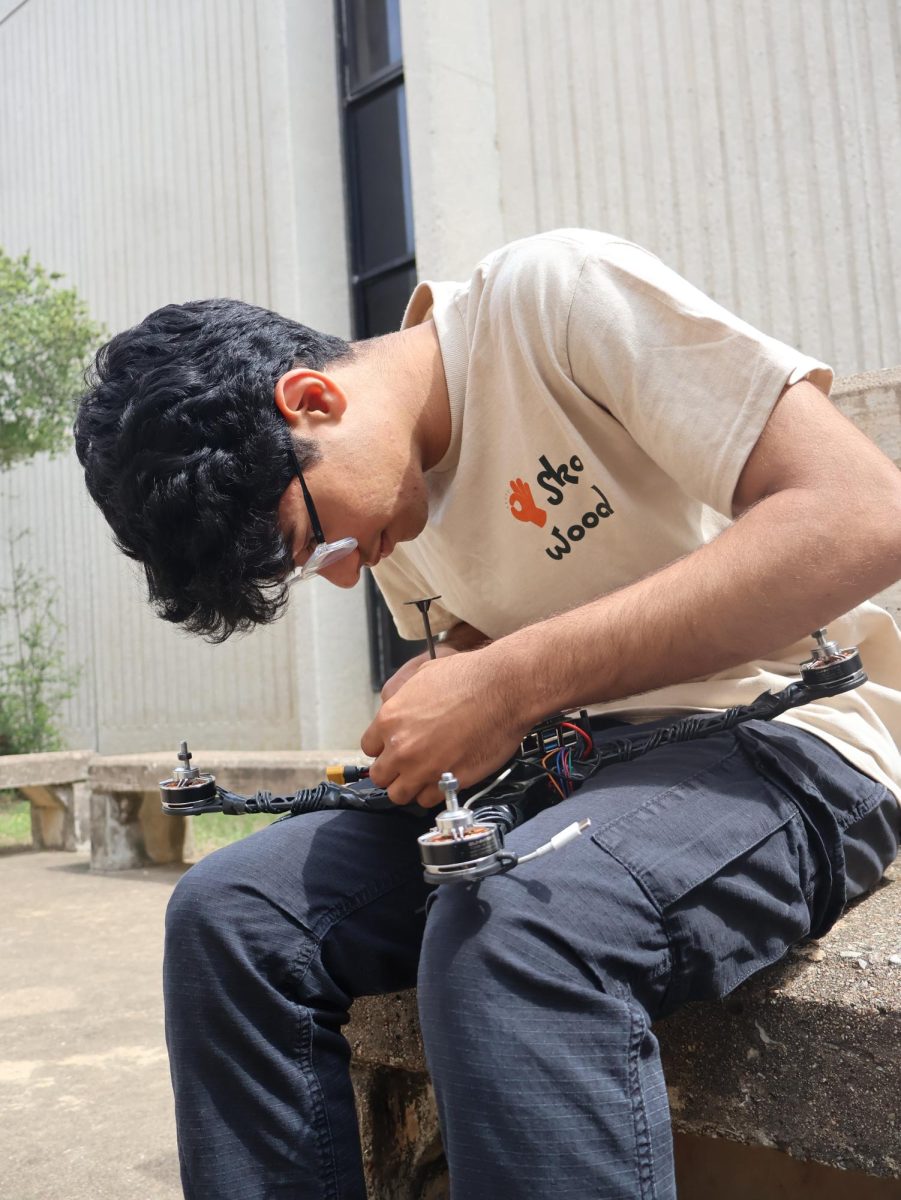
“Computer science is really broad, and I know I want to go into the non-theoretical [side of the field], which ties into engineering significantly,” Kameswar said. “The engineering classes I’ve taken at school sparked my interest in making physical things [alongside] the software [computer science elements].”
For other students wanting to pursue UIL Computer Science, Kameswar urges them to look at the bigger picture.
“Throughout UIL, it’s really my computer science experience outside of school that allowed me to get this far,” Kameswar said. “I’d say if you want to be successful at UIL, don’t limit yourself — explore other fields.”
Above all else though, Kameswar emphasizes the power his love for computer science has had, regardless of whether it manifested through pizza graphics, web development, or competition preparation.
“It all stemmed from my passion for computer science,” Kameswar said.