
-
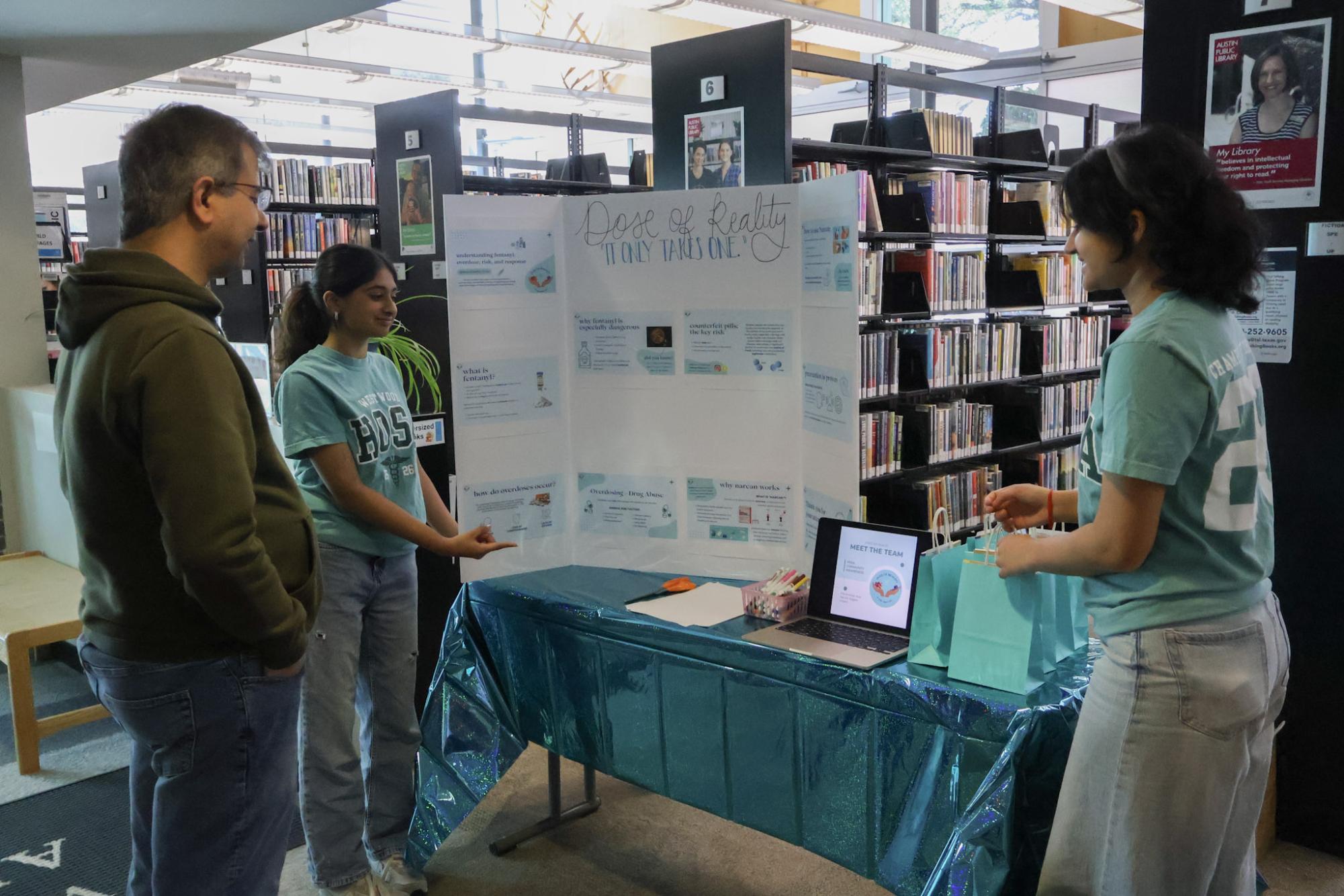
Pointing towards their booth, sophomores Aanya Pathak and Saloni Chitari talk to a library member about show their research and care kits. The students created care kits to give to library members who created a card.
-
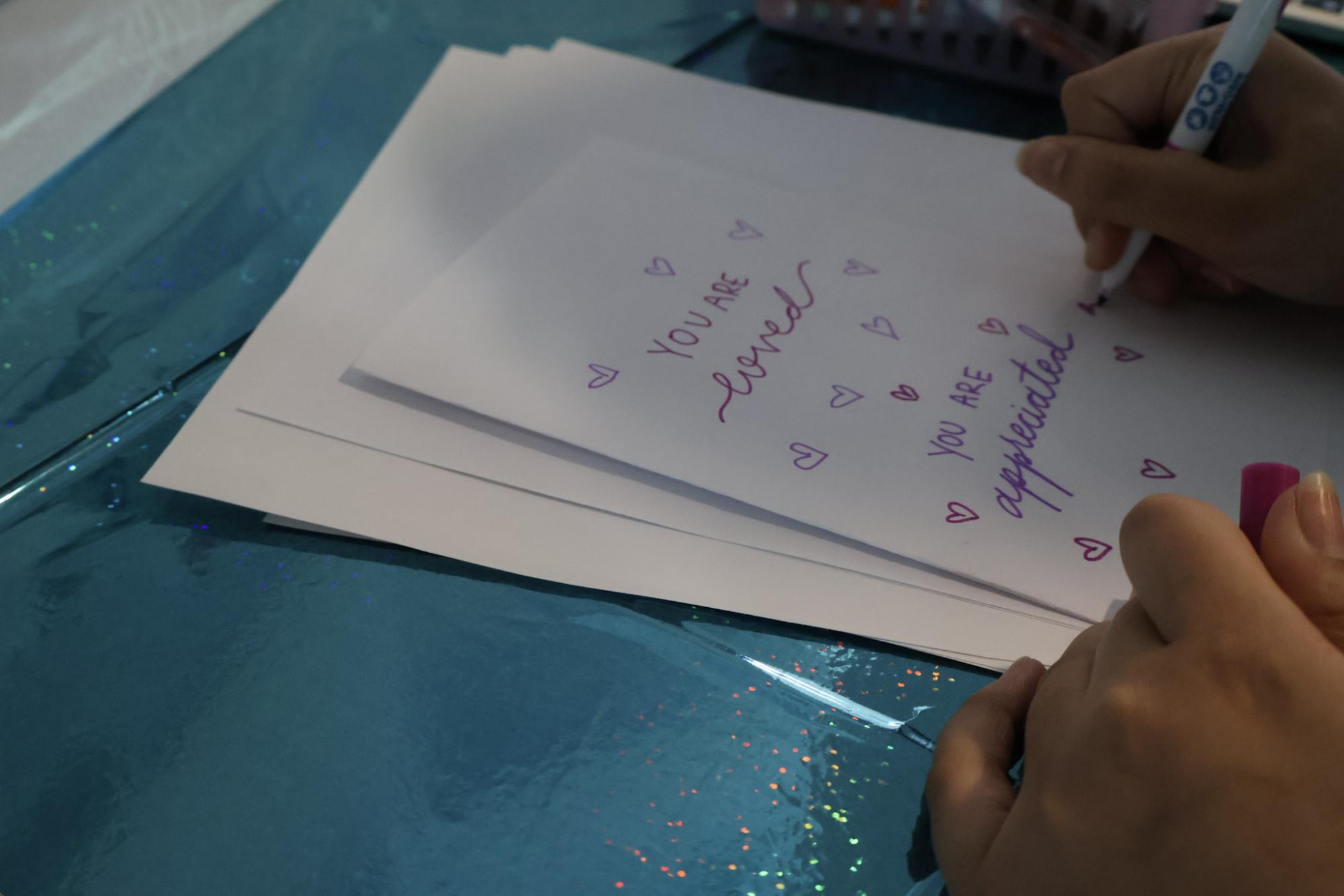
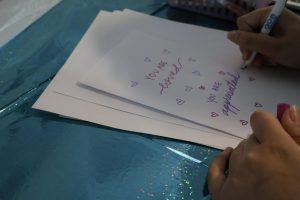
Using materials provided by the organization, a library member creates a card in exchange for a carekit. By the end of the day, the organization had 15 cards ready to give out.
-
Talking animatedly, Dose of Reality students hold a conversation with a library passerby. The students created a trifold board with their research and pulled up their YouTube channel with their podcast details.
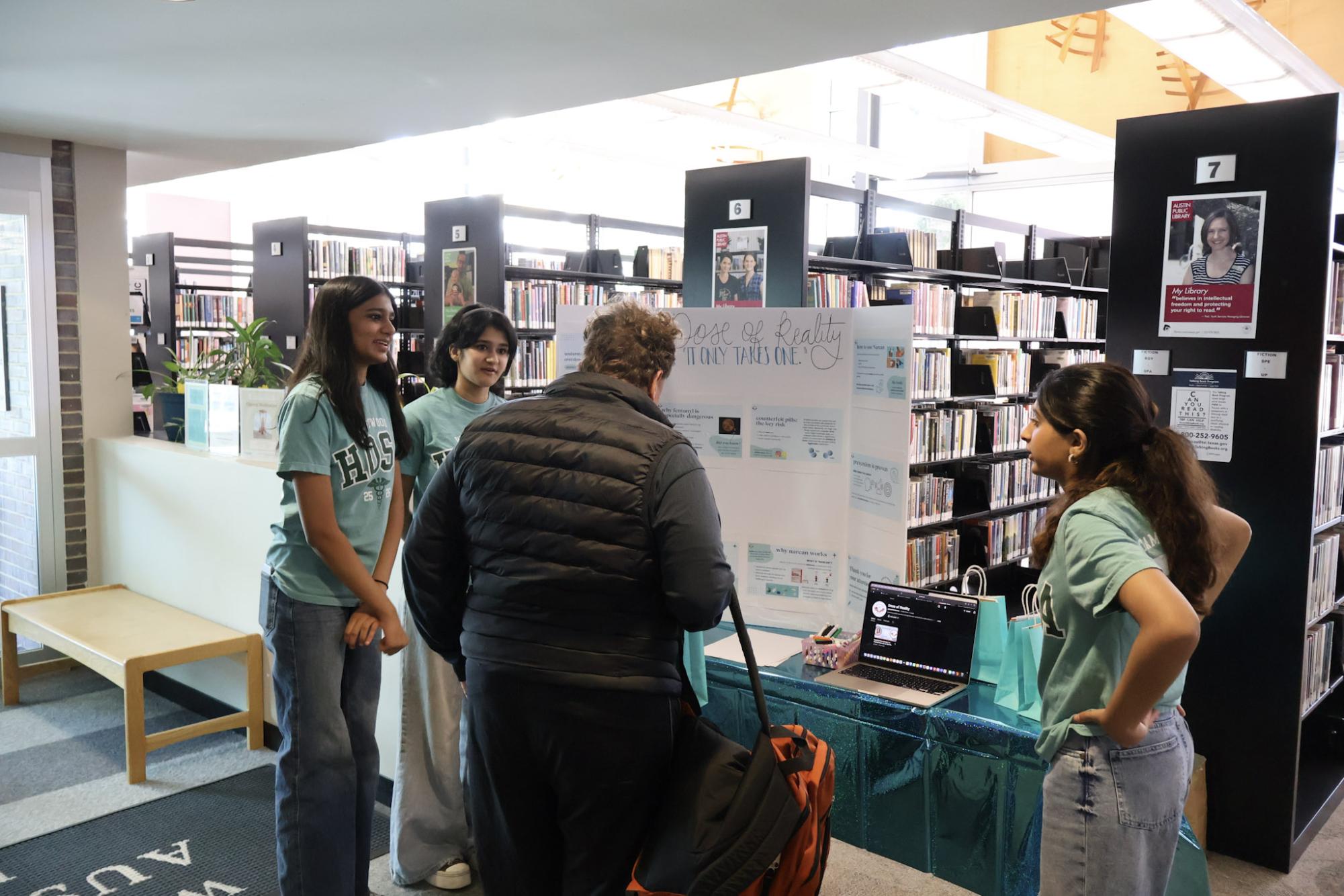
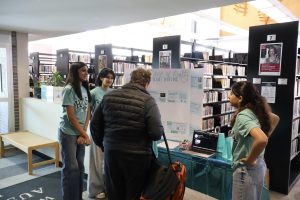
On a quiet afternoon at the Austin Public Library, eyes were immediately drawn to a bright blue table standing out against the rows of bookshelves. Standing beside the display, sophomores Aanya Pathak, Saloni Chitari, and Reesha Malpani, three Future Health Professionals (HOSA) students, delivered a dose of reality on fentanyl poisoning to passersby on Saturday, Jan. 17.
Pathak, Chitari, and Malpani are students competing in HOSA’s Community Awareness competitive event through their student-led organization Dose of Reality, raising awareness on the dangers of fentanyl and opioid misuse among youth through digital and in-person outreach campaigns.
“Up until this library visit, we’ve been working on a lot of impactful initiatives in our community,” Pathak said. “One being our social media initiatives, which have reached over 10,000 people. We have a Beyond the Dose podcast where we’ve connected with a few professionals so far and have also had a ‘Reality Refresh’ event, where we chatted with parents and students at a dance studio about our initiative and raised enough funds for our care kits, which include a lot of helpful resources and informative materials.”
At the library event, the group created an engaging display complete with an informational trifold, dozens of bright blue care kits, and cardmaking supplies, intentionally placed to draw in visitors and start conversations about fentanyl, the risks of drugs, and opioid awareness.
“During our booth, we had a trifold board with information on fentanyl, how overdoses actually happen, misconceptions, narcan usage, and so much more,” Pathak said. “But we were [also] using this event as a platform to give away our care kits. We also wanted to spread positive vibes, so we encouraged community care messages and brought cardmaking materials for our community members [and] whoever wanted to participate to create their own affirmative positive cards.”
The care kits were part of the engaging display the group used to draw attendees to the table after entering the library. The group made these care kits the week before in the morning in the library, as an important component of their project.
“We made these care kits a few weeks prior,” Pathak said. “We ordered the materials close to the New Year’s. The next week, we made the care kits [in] our school’s library, and we had five volunteers helping out to make the care kits. We had original initiative cards that we made filled with our presentation materials, as well as resources, hotline resources, and ways to use narcan.”
The group presented to over 50 library visitors about their research, inspiring 15 community members to make cards. The positive community reaction to their cardmaking stall pleasantly surprised them.
“It was a little surprising and very heartwarming to see the library members’ reaction to our cardmaking stall,” Chitari said. “It was a really touching moment because so many of these cards were creative and so heartfelt, and you could tell a lot of them took time to think through what they were writing.”
The team’s mission of raising awareness about opioid poisoning came to life after two members attended a guest speaker event with the founder of Texas Against Fentanyl, an organization dedicated to spreading awareness about fentanyl.
“The person who spoke at the guest event had experienced loss herself, and it was a tragic story that we wanted to do all we could to make sure it didn’t happen again,” Chitari said. “Even though a lot of organizations are raising awareness about this problem, I know a lot of people in our local community still don’t know much about it, and all the people we’ve talked to and the stories we heard have been such an impactful experience so far.”
The group’s initiative awakened under HOSA, an organization catered toward aspiring healthcare professionals, which provides opportunity for skill development, leadership experience, and learning opportunities in health science fields. To participate in the organization’s various competitive events, HOSA members must achieve a certain number of social, service and fundraising points each semester.
“I like that HOSA has a lot of different opportunities that can allow you to have points,” Chitari said. “I really like that they are usually really unique, whether it’s fundraising or donating different things. I think that also helps make all of its members really used to doing services to others, which I think is a big part of being in the medical field.”
Chitari, who hopes to be a brain surgeon, utilizes her experience participating in her HOSA event as a way to help the community, which acts as practice for helping patients in the future.
“It’s definitely been really interesting to learn more about this topic,” Chitari said. “I didn’t know as much about fentanyl and opioid overdosing other than the fact that it was an issue that many people faced around the world. However, competing in HOSA’s Community Awareness event has helped me really understand how important it is that people know more about the dangers of fentanyl poisoning, and it’s been a lot of fun planning all these informative events and outreach initiatives with my friends.”
The team is working on several new outreach events and campaigns, one of them being expanding their digital reach through their podcast and social media accounts.
“We have talked to three people so far for our podcast, including an Emergency Medical Technician[EMT], an anesthesiologist, and a representative from the national organization Song for Charlie,” Pathak said. “I think talking to these people who have experience with fentanyl and also have experienced loss has given us a lot of meaningful insight that helped us truly understand the impact and importance of what we’re doing.”
While the library event marked an important milestone for Dose of Reality, the group believes this is only the beginning. By combining education with compassion, they hope to expand their reach and spread awareness as far as possible, ensuring that more people understand the dangers of fentanyl.
“One thing this whole process has taught me is that education is the first step to avoidance, and that’s something we really try to emphasize in all of our events and presentations,” Pathak said. “I hope that we can teach people about the dangers of fentanyl and inspire someone to ask for help. If even one life is saved from our efforts, then it’s all worth it.”